Art History and Native Art Challenges of Inclusion Book
This twelvemonth saw unprecedented tumult in the real world—and in the art earth, too. There were peppery debates over cultural appropriation and the definition of censorship; a legal tussle over deaccessioning at the Berkshire Museum; and forepart-folio exposés on the Metropolitan Museum of Art, the cultural philanthropy of the Sackler family, and the heir-apparent of Leonardo'sSalvator Mundi.
Below, we recount the biggest headlines and controversies of the year in chronological club. Only don't look the debates they ignited to end in 2017.
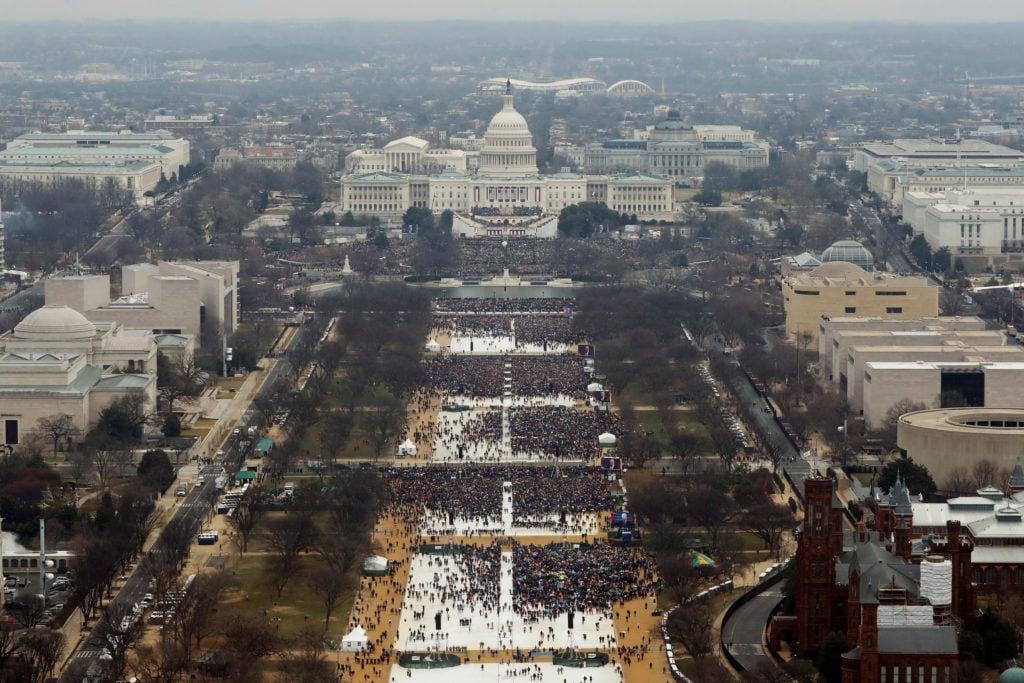
Trump'south inauguration was backed past a number of high-profile fine art-globe figures. (Photo by Lucas Jackson – Pool/Getty Images)
one. The Art Collectors Behind Trump's Inauguration Parade
While many artists and other fine art professionals were figuring out how best to protest the inauguration of President Donald Trump, a number of high-profile art collectors were helping to fund information technology. Billionaire hedge fund managing director and mega-collector Steve Cohen was a major donor to Donald Trump's inauguration parade, it emerged, handing over $1 million for the sparsely attended consequence on Jan 20. Other art-earth figures who backed the festivities included cultural philanthropist Henry Kravis ($ane million) and collector Steve Wynn, via his visitor Wynn Resorts ($700,000). Iranian-American sometime diplomat Hushang Ansary and his wife Shahla Ansary, who helped back the new Islamic art brandish at the Museum of Fine Arts, Houston, reportedly gave $2 million.
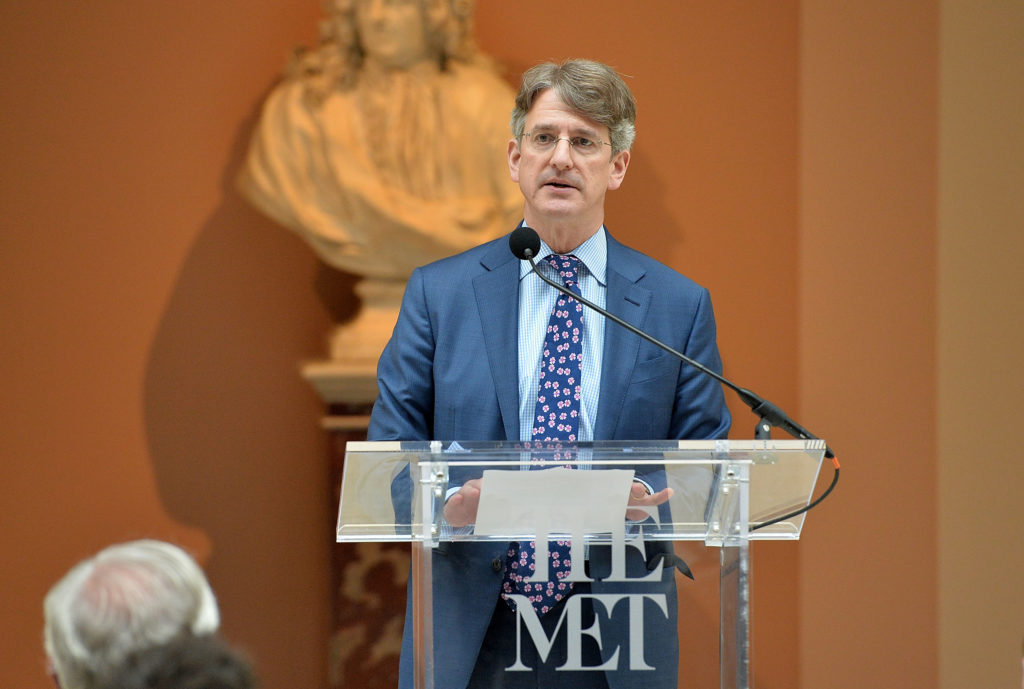
Thomas P. Campbell speaking at the Met in 2016. Photo: Slaven Vlasic/Getty Images.
2. Turmoil at the Summit of the Metropolitan Museum of Art
In a bombshell serial of articles, the New York Times uncovered unprecedented tension and turbulence at the land's largest art museum. In February, a front-page story asked whether the Met was "a great institution in decline" and recounted the museum's mounting deficits and stalled expansion plans. It "went off similar an atomic bomb" on Fifth Avenue, according to Vanity Fair. Just over three weeks later, the museum's managing director Thomas Campbell resigned. In Apr, the Times followed up with a report about "a close personal human relationship" betwixt the manager and a member of the digital media team, which the newspaper said contributed to "a years-long erosion of respect for his authorisation and judgment." (Campbell, for the record, had a different take on his divergence, and an investigation conducted past the museum found no wrongdoing.)
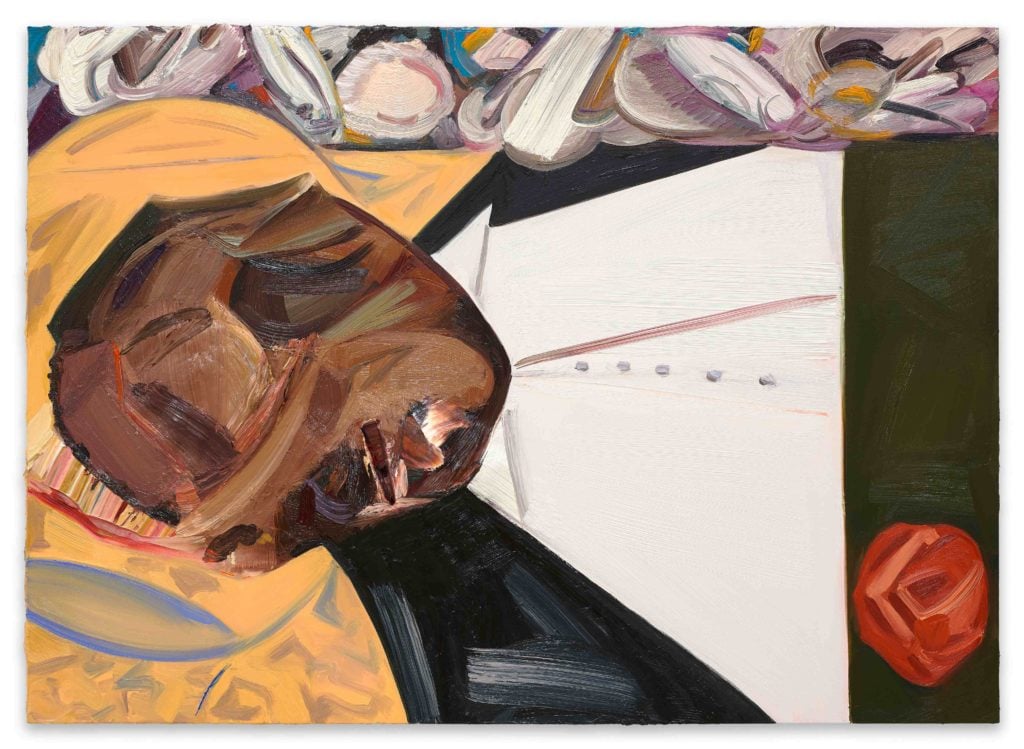
Dana Schutz, Open Catafalque (2016). Oil on canvass. Collection of the artist; courtesy Petzel, New York.
three. The Whitney Biennial Defends Dana Schutz'south Open Casket
Perhaps the most divisive art-world moment of the year came in March, when Dana Schutz's Open Catafalque (2016), a portrait of the disfigured corpse of Emmett Till, debuted at the Whitney Biennial. The painting prepare off a heated debate over whether a white artist like Schutz has the right to make art that draws on trauma experienced by the Blackness community. On opening weekend, the artist Parker Bright stood in forepart of the painting wearing a t-shirt scrawled with a Sharpie to read "Black Death Spectacle." Soon after, British artist Hannah Black wrote a widely shared open letter that suggested the painting be removed from the prove and destroyed. The public reckoning spilled out into the pages of newspapers, magazines, and Facebook pages—and fifty-fifty followed Schutz to Boston, where her solo exhibition at the urban center's ICA drew opposition. Months later, the debate over the painting continues to shape conversation about cultural appropriation, censorship, and who has the correct to depict some other'due south suffering.

Sam Durant, Scaffold. Courtesy of Sarah Cascone.
4. Sam Durant'sScaffoldComes Down at the Walker Art Center
The ink on thinkpieces about Open Casket had barely dried when another work of art—Scaffold by Sam Durant—set off a media firestorm. The sculpture draws on the gallows built for seven major executions in Us history, including the largest mass execution ever to accept place in the US, which killed 38 Dakota Indians in 1862 in Mankato, Minnesota. The work was destined for the Walker Art Center's Minneapolis Sculpture Garden. Following outcry from the Dakota nation—who said the work trivialized a traumatic chapter in its history—Durant and the Walker'due south managing director Olga Viso agreed to remove Scaffold. After lengthy discussions, Dakota nation decided to ceremonially bury the sculpture at an undisclosed location. Although the Walker was largely praised for its handling of the situation, Viso announced she would footstep downwards from her post several months afterward—and some attributed her departure to Scaffold.
5. Jimmie Durham's Native Identity Questioned (Again)
In June, the fence over cultural cribbing surfaced again when the Walker Art Center opened a retrospective of the work of artist Jimmie Durham. (Information technology'southward been a challenging yr for the Walker!) Ten Cherokee artists, curators, and other professionals published a forceful editorial disputing the artist's Native American heritage and arguing that the ambiguity surrounding his identity does a disservice to "legitimate Native artists and cultural leaders." Others came to the artist'southward defence force, noting that neither Durham nor the show's curators sought to position the artist as a representative of all Native American experience and that there is no ane way to ascertain Native identity. The prove is now on view at the Whitney Museum in New York.

The Berkshire Museum, courtesy of Wikimedia commons.
half-dozen. The Berkshire Museum's Bid to Sell Its Art Hits a Roadblock
A museum's decision to sell off work from its collection is oftentimes controversial, no matter the circumstances. Simply the Berkshire Museum'due south plan to auction forty works by artists including Norman Rockwell and Albert Bierstadt—and use the gain to replenish its endowment and fund an architectural expansion—was particularly combustible. Opponents claimed the museum was exaggerating the precariousness of its fiscal state to justify the sell-off, which violated the wishes of its donors. After months of legal wrangling, a gauge put the planned sell-off on agree the day earlier the first batch was due to be auctioned at Sotheby's. The Massachusetts Attorney General now has until Jan 29 to complete a legal review of the plan.

The statue of Confederate General Robert E. Lee stands behind a crowd of white nationalists, neo-Nazis and members of the "alt-right" during the "Unite the Right" rally on August 12 in Charlottesville, Virginia. (Photo by Bit Somodevilla/Getty Images)
seven. Battle Rages Over the Fate of Amalgamated Monuments
On August eleven, white nationalists descended on Charlottesville, Virginia, to protest the removal of a monument to Robert. Due east. Lee from Emancipation Park. After a twenty-four hours of tearing clashes—leading to 3 deaths and dozens more injured—officials in cities beyond the United states of america began to renew calls to remove Confederate monuments from public grounds. In recent months, Senator Cory Booker introduced a pecker to remove these statues from the U.s.a. Capitol; New York held a serial of hearings almost the fate of "symbols of detest" in the city; and Memphis took down two Confederate monuments, including 1 of a KKK leader. Although about every historian surveyed past artnet News believed the sculptures should be removed, not everyone was in agreement nigh what to do with them—or what, if annihilation, should replace them.
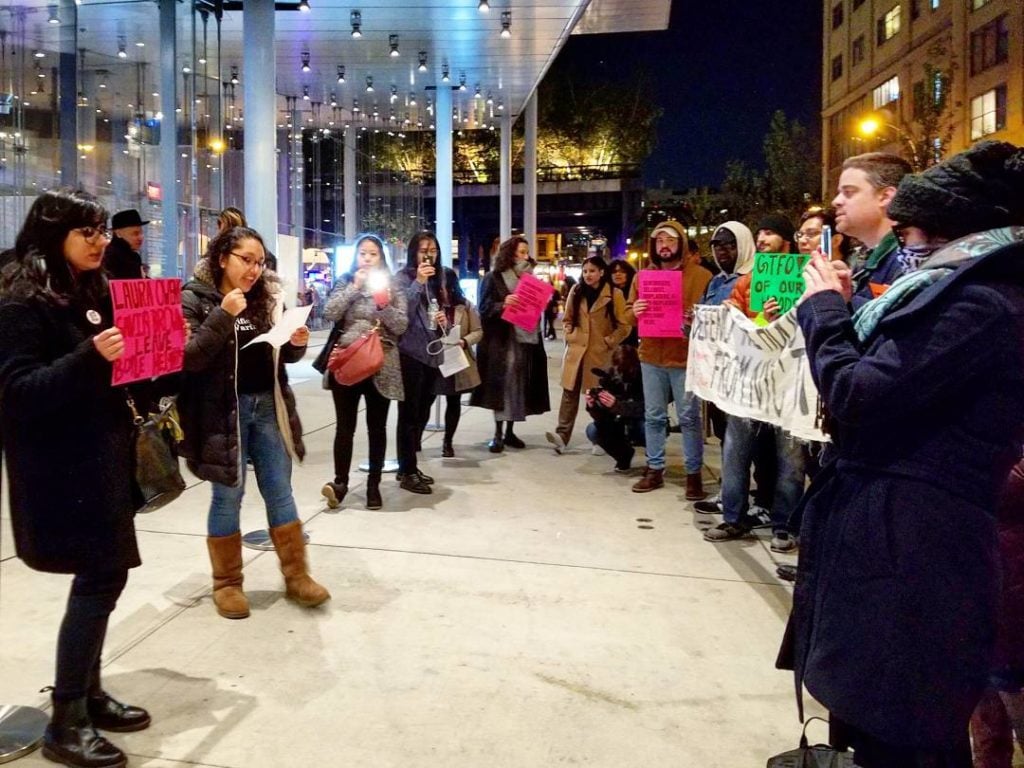
Protesters at Laura Owens'southward retrospective at the Whitney. Photo courtesy of Decolonize This Place, via Instagram.
viii. The Gentrification Fence Hits a New High—and Laura Owens Comes Nether Fire
How much does the art world contribute to gentrification? The question has been at the heart of a roiling debate in Los Angeles (and, to a lesser extent, New York) this past year. Ground nada for this debate is Boyle Heights, a working-class, largely Latino neighborhood in LA that has go a pop destination for upstart galleries. In February, PSSST Gallery closed subsequently less than a yr following sustained anti-"artwashing" protests. The creative person Laura Owens—who has a studio and project space in the neighborhood—said she has received decease threats. Meanwhile, in New York, the debate over art's role in gentrification came to a head this fall, when James Cohan Gallery mounted an exhibition of work by Omer Fast in its Chinatown space that community members said perpetuated harmful stereotypes and illustrated just how little galleries interact with their surrounding communities.
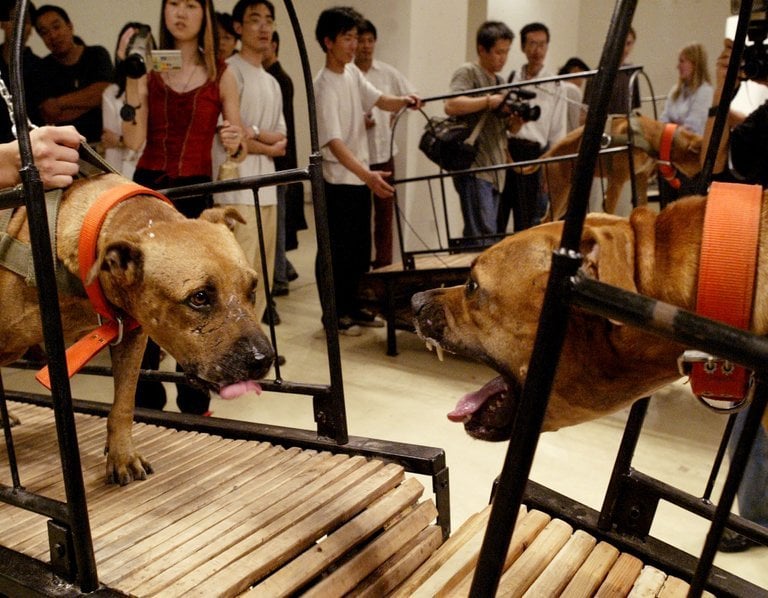
Sun Yuan and Peng Yu'southDogs That Cannot Touch Each Other. Courtesy of Galleria Continua, San Gimignano, Beijing, Les Moulins, Habana.
ix. The Guggenheim Cocky-Censors Its Chinese Art Show
It is rare for an exhibition to seep outside the hermetically sealed art world and capture the attention of the full general public. Simply the Solomon R. Guggenheim Museum's exhibition "Art and China After 1989: Theater of the World" did just that—even though the museum may have ultimately wished it hadn't. In the lead-up to the prove, animate being rights activists began protesting the selection of 3 works, including Sun Yuan and Peng Yu's video Dogs That Cannot Touch on Each Other, which documented a 2003 performance in which pit bulls were chained to treadmills. The museum ultimately withdrew the works, citing "explicit and repeated threats of violence." The uproar over the exhibition—and the museum'southward response to it—laid bare urgent questions about the public's relationship to institutions. "Are [museums] just a place for entertainment that should but present things that are lovely or morally agreeable, or does a evidence like 'Theater of the World' also stand for a historical test of another culture and another fourth dimension?" our critic Ben Davis asked. "Fifty-fifty if aspects of it are deeply troubling or repugnant, should they be presented if they were important?"
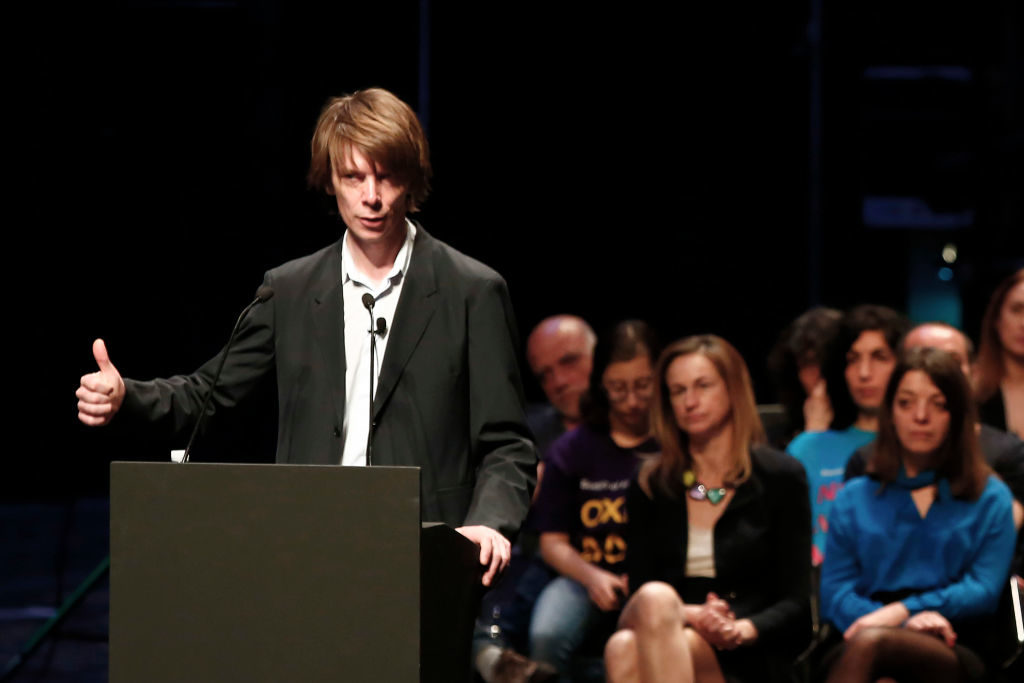
Adam Szymczyk, the artistic managing director of documenta fourteen, speaks at a press conference for the exhibition on April half-dozen in Athens, Greece. Photograph by Milos Bicanski/Getty Images
10. documenta 14 Goes on a Spending Spree—and Gets a Bailout
A number of artworks in this year's documenta exhibition, which took place in both Kassel and Athens, focused on the theme of national debt. Then it is perhaps ironic that coverage of the quinquennial's ain debt threatened to eclipse the contents of the exhibition itself. The ambitious, two-city show left documenta's parent company with a deficit of $6.3 million; the city of Kassel and the state of Hesse had to step in to help cover the shortfall. The fiasco led to fierce debates over who is responsible for controlling the costs of large-scale, ambitious art events; the role government should play in such projects; and the long-term viability of international biennials in general. In the wake of the controversy, Annette Kulenkampff, the CEO of documenta's parent visitor, announced she would step down in June, a yr before her contract was due to expire.
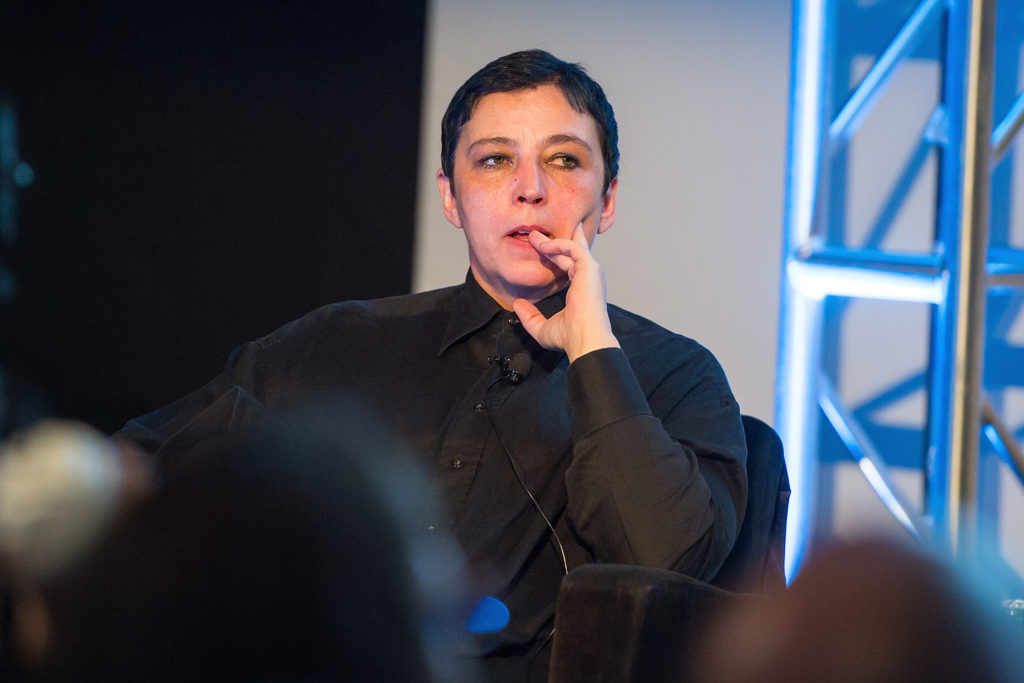
Beatrix Ruf. Photo: Michael Stewart/Getty Images.
11. Beatrix Ruf Abruptly Resigns From the Stedelijk
In September, the High german-born director of Amsterdam'south Stedelijk Museum, Beatrix Ruf—a tastemaker and fixture on the art globe'due south "most powerful" lists—appear her sharp resignation. Her departure followed a serial of Dutch media reports that that raised questions about her ties to individual collectors, an fine art advisory company she operated while leading the museum, and other potential conflicts of involvement. The Dutch newspaper NRC Handelsblad also questioned the deal the museum made to secure a major gift from German collector Thomas Borgmann (which was accompanied by a $one.8 million purchase of other work from his collection). Ruf has denied the Dutch media's accusations of conflict of interest, maintaining that most of her freelance income in recent years came from work completed before she became the managing director of the Stedelijk and that both the gift and her side activities were approved by the museum's board. But the episode ignited discussion beyond the industry over the relationships that accept long existed between collectors and curators—and whether industry norms should be reconsidered.
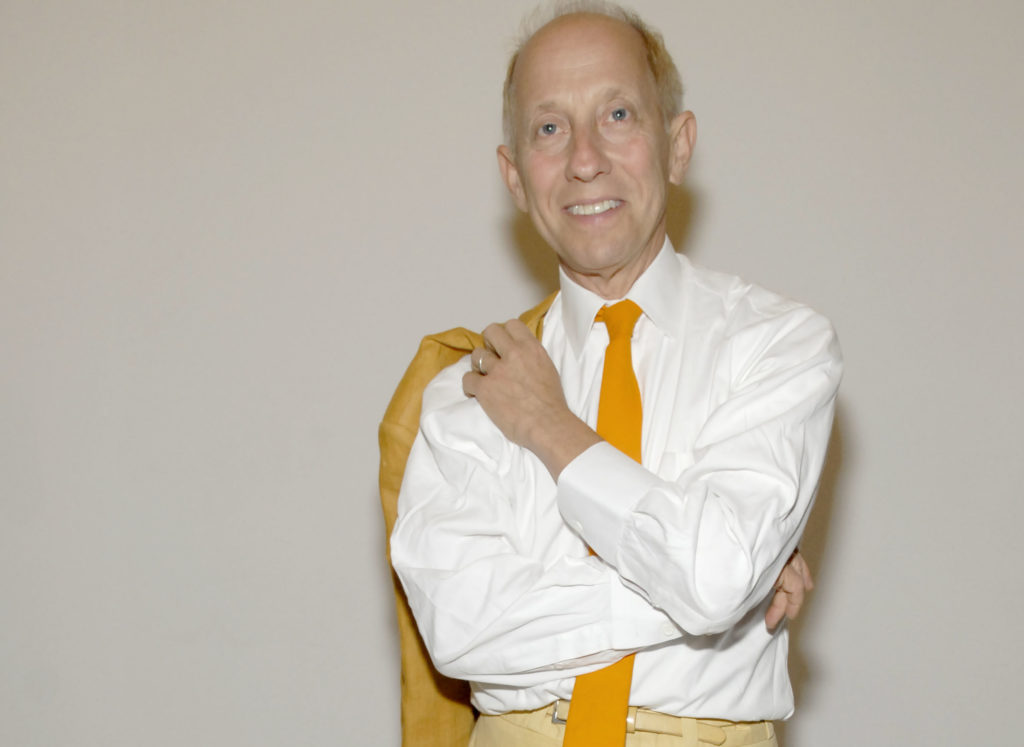
Knight Landesman in New York Metropolis. (Photo by ZACH HYMAN/Patrick McMullan via Getty Images)
12. The 'Weinstein Issue' Hits the Art World
In the wake of revelations about Harvey Weinstein's decades-long pattern of abuse, women began telling their stories of workplace harassment in nearly every industry—including the art world. Longtime Artforum co-publisher Knight Landesman resigned in October afterward a cord of sexual harassment allegations came to low-cal and a former employee, Amanda Schmitt, filed a lawsuit against him and the magazine. To date, 22 men and women have defendant the prominent art-world figure of harassment. Meanwhile, Armory Show director and former artnet News editor-in-chief Benjamin Genocchio, Jewish Museum curator Jens Hoffmann, and Dallas Museum of Art curator Gavin Delahunty resigned or were fired post-obit allegations of workplace harassment or misconduct. Artist Chuck Close has also come up under scrutiny for inappropriate behavior toward women he asked to pose for him, while collector François Odermatt has been defendant of sexual misconduct and assault.
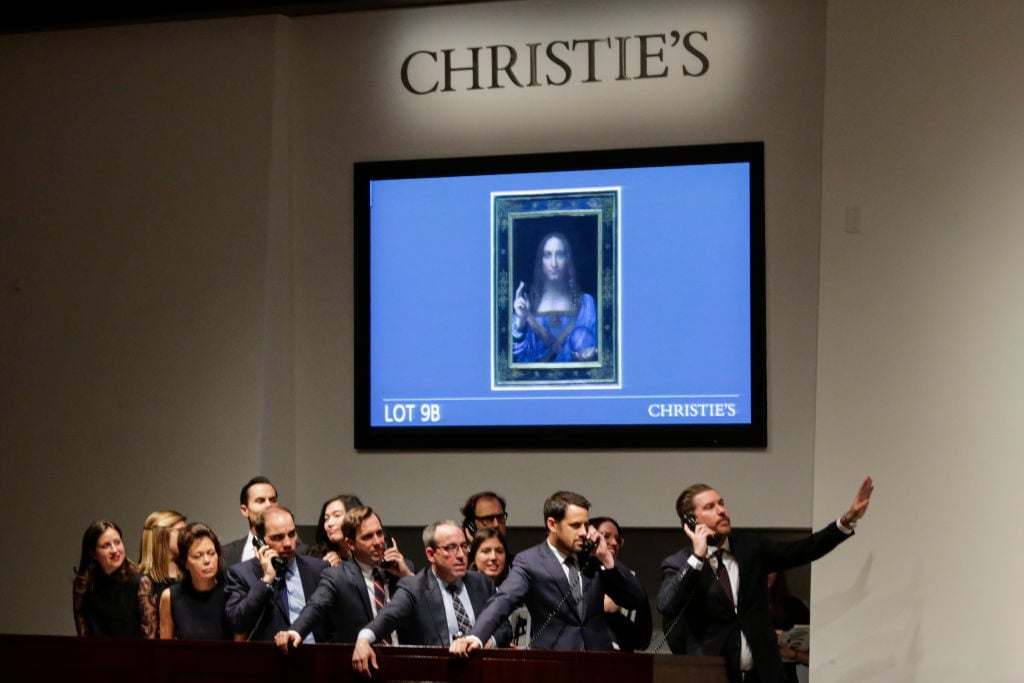
Bidding is underway for Leonardo da Vinci'south "Salvator Mundi" at Christie's on Nov 15, in New York. Photograph by Eduardo Munoz Alvarez/Getty Images.
13. Salvator MundiSells for a Heed-Boggling Price
Jaws dropped in November when Leonardo da Vinci'south Salvator Mundi sold for a record-shattering, mind-boggling $450.three meg at Christie's. With the clang of a gavel, the painting became the most expensive work of art ever purchased—and perhaps the most commented upon as well. It seemed everyone with an net connectedness had an stance about the work, and some critics questioned its authenticity and condition. Jerry Saltz quoted a "well-known expert" who quipped that the painting had been included in Christie'due south postwar and contemporary sale because "90 per centum of it was painted in the last 50 years." Meanwhile, one-time Met director Thomas Campbell, the work's quondam possessor, and a member of Christie'due south staff got in an Instagram spat over its condition and conservation.
It was merely subsequently the sale, however, that the intrigue really began. Reports surfaced that the work had been purchased by Kingdom of saudi arabia'south crown prince every bit a gift for the Louvre Abu Dhabi. (The museum, which has stepped forwards as the work'south possessor, denies this and claims it simply asked one of the prince's associates to bid on its behalf.) The drama is likely to spill over into 2018, merely regardless of who bought information technology, the painting—and its staggering price—has become a pawn in a much bigger geopolitical game unfolding across the Middle Eastward.
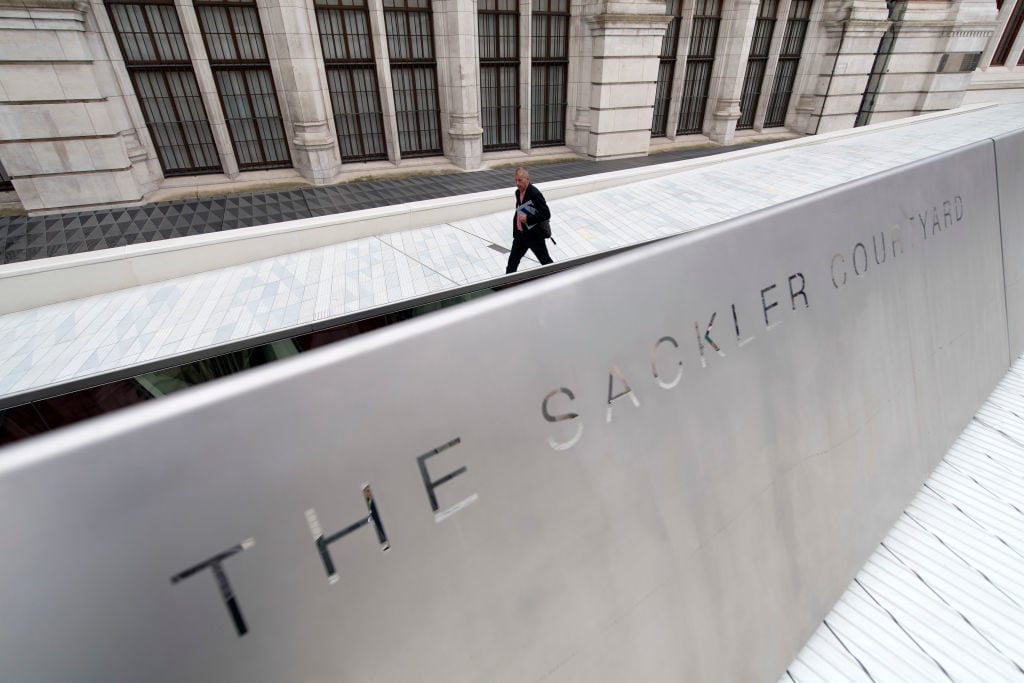
The Sackler Courtyard, a new addition to the Victoria and Albert Museum, was unveiled to the public in London on June 28. Photo: Justin Tallis/AFP/Getty Images.
xiv. The Sackler Family'southward Ties to Oxycontin Give Museums an Ethical Upset
Do museums have a responsibility to reckon with the source of a donor's wealth? The question surfaced yet again post-obit exposés in Esquire and The New Yorker that delved into the Sackler family unit's fortune, a sizable portion of which was built on the sales of the narcotic painkiller Oxycontin. The Sackler name graces museum wings, courtyards, and galleries at more a dozen museums around the globe. In the United states, many of the beneficiaries of Sackler largesse were funded by a co-operative of the family unit that did not benefit directly form the sale of the addictive drug. In the UK, funding came largely from Theresa and the belatedly Mortimer Sackler, who, forth with his blood brother, made a fortune from Oxycontin. Although some say museums should cut ties with the family, no establishment in either country was willing to criticize the funders or the source of their wealth, according to an investigation by The Fine art Paper.
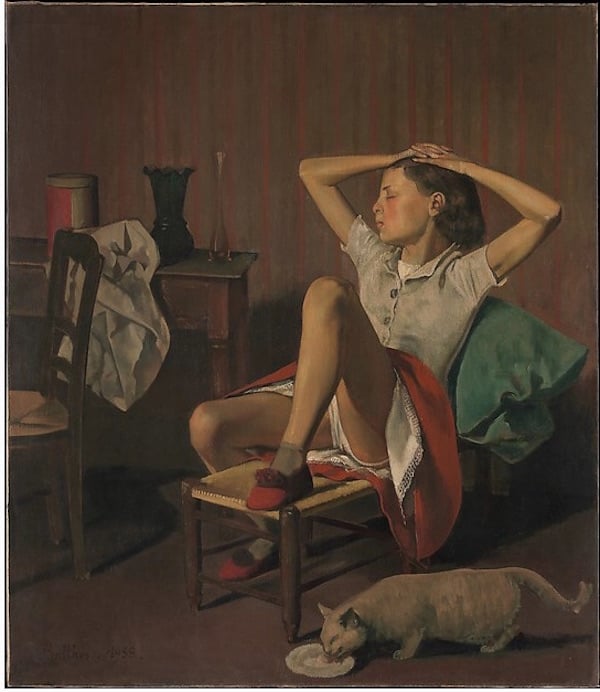
Balthus, Thérese Dreaming (1938). © 2017 Artists Rights Lodge (ARS), New York. Courtesy the Metropolitan Museum of Art
fifteen. Balthus Creates a Ruckus at the Met
It seems merely plumbing fixtures that a year characterized by censorship debates would terminate with yet another. In Dec, the Metropolitan Museum of Art resisted pressure to remove a painting of a young girl by Balthus, Thérèse Dreaming (1938), which had been targeted by an online petition. The petition—which has garnered 11,560 signatures to date—states that the Met should non "proudly brandish" an image that "romanticizes the sexualization of a child." The museum insisted that the painting would stay, calling the controversy "an opportunity for a conversation" about the "continuing evolution of existing culture." Critics celebrated the Met'due south response, noting that "if we remove the Balthus because it offends in the current climate, we pretty much have to remove whole wings of fine art from the Met."
Follow Artnet News on Facebook:
Desire to stay ahead of the art world? Subscribe to our newsletter to get the breaking news, center-opening interviews, and incisive critical takes that bulldoze the chat forward.
Source: https://news.artnet.com/art-world/art-world-controversies-2017-1188680
0 Response to "Art History and Native Art Challenges of Inclusion Book"
Post a Comment